The Restoration of Savary Island’s Sand Dunes


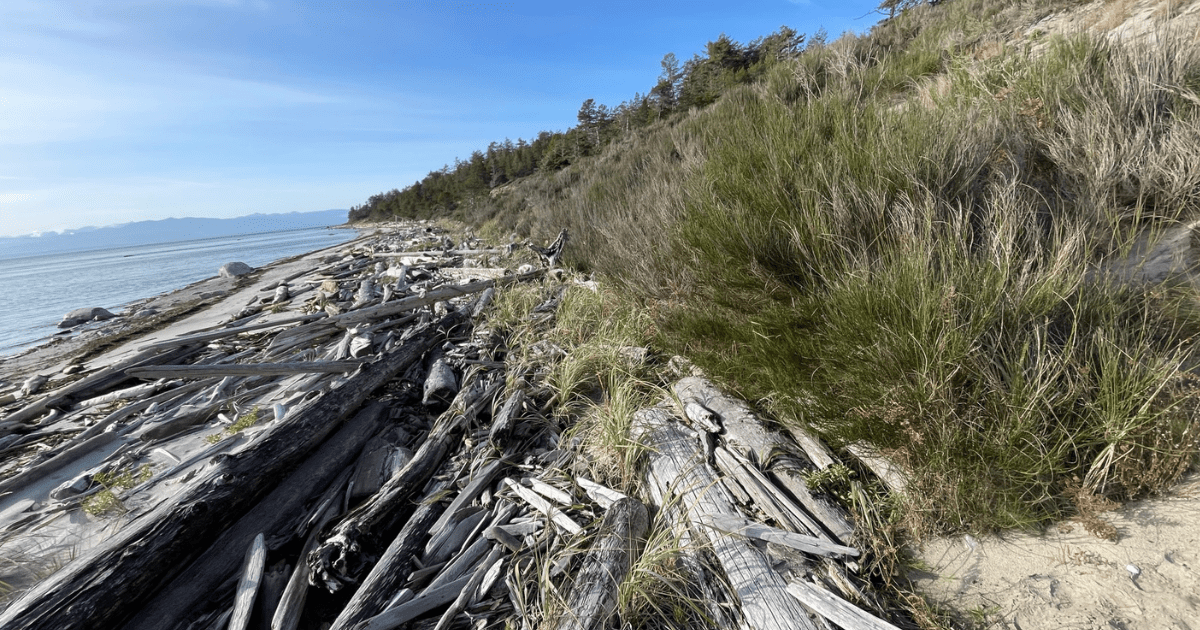
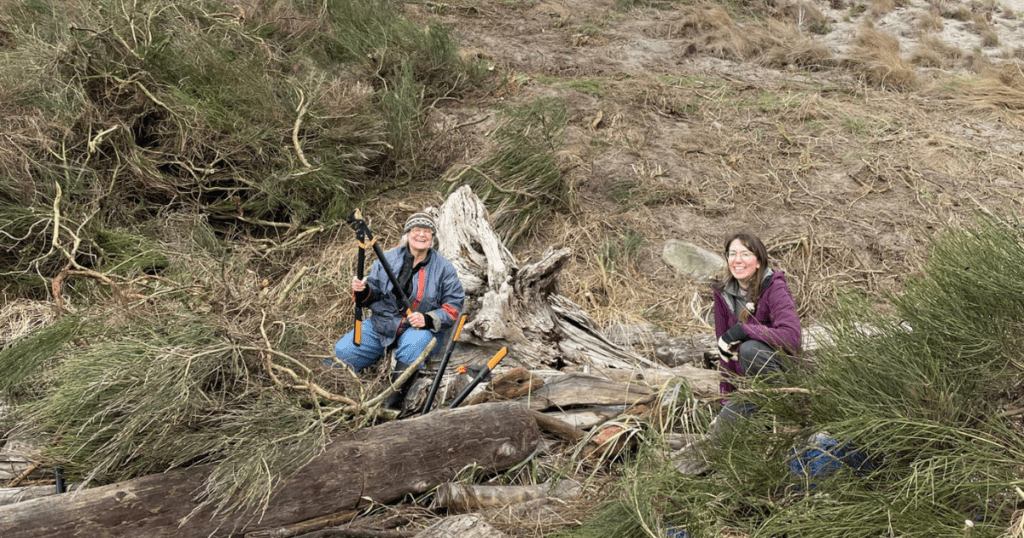
When the South Coast Conservation Crew first arrives at Duck Bay on Savary Island, we walk through a corridor of Scotch broom (Cytisus scoparius). It is a familiar introduced species that we have removed from other sites before, but here the invasive plant has grown so tall it feels like walking through a small forest, towering above our heads, singularly abundant over anything else in the area. While we walk along the beach it takes quite a few minutes before we come to some of the few open dune areas on Savary Island that are free from Scotch broom.
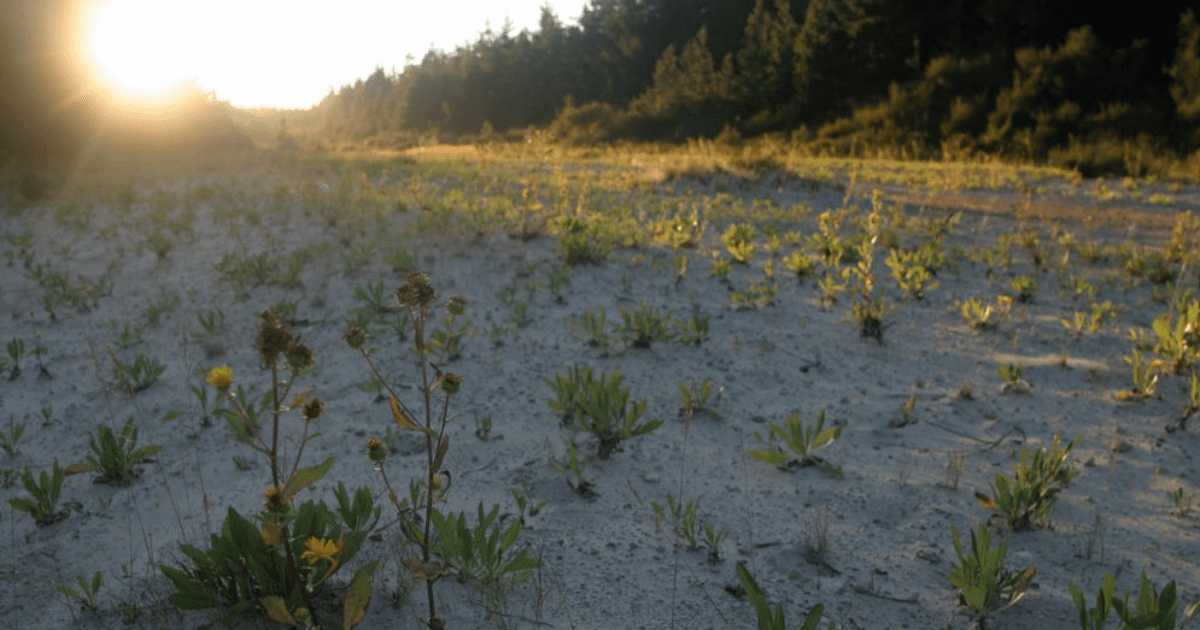
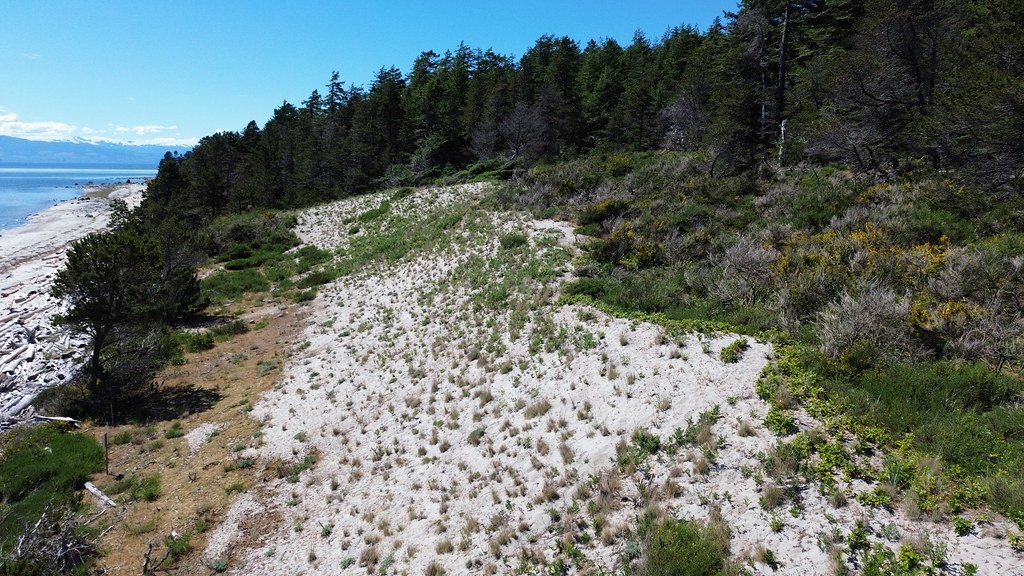
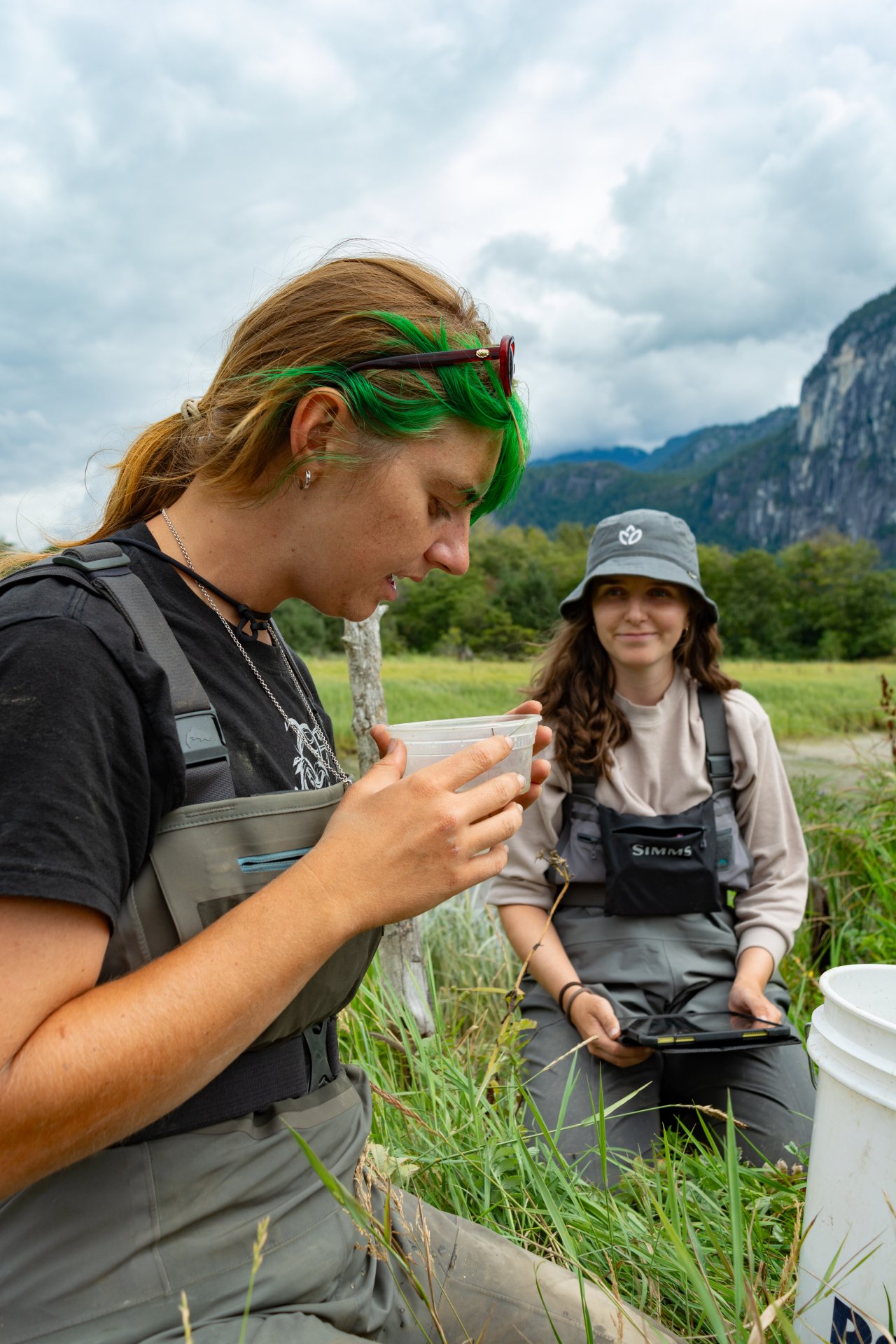
When we encounter our work site, it is a welcome view. We are here to monitor the flora and fauna we encounter in the sand dunes along the southern coastline of the island, keeping track of the recovery of sand dune ecosystem after the removal of Scotch broom. This initial work was done by previous crew members and volunteers over several years, and now some of the dunes have been revealed once again. Watching their recovery is inspiring and we are excited to see what plants we will find.
The field crew is looking for one plant in particular: the contorted–pod evening primrose (Camissonia contorta). This small herbaceous plant has red to green stems and leaves, with an almost succulent-like texture and small yellow flowers. It ranges from California to the southernmost edge of British Columbia, and it is only found in open areas with sandy and well-draining soils. Sand dunes are a harsh environment for any plant to grow in, the shifting sands are always moving and have frequent disturbances. The water drains away quickly and there are very little nutrients with hot temperatures and desert-like conditions in the summers.
The plants that grow here are adapted for these conditions and thrive in this extreme place where there is little competition. The contorted–pod evening primrose (CPEP), is one such plant, well adapted to its environment by growing and flowering early in the season then waiting out the hot and dry summer as seeds, and germinating once again when the rain comes in the fall. This means that they can grow and live where few other plants can, free from competition for the scarce amounts of water and nutrients that are available.
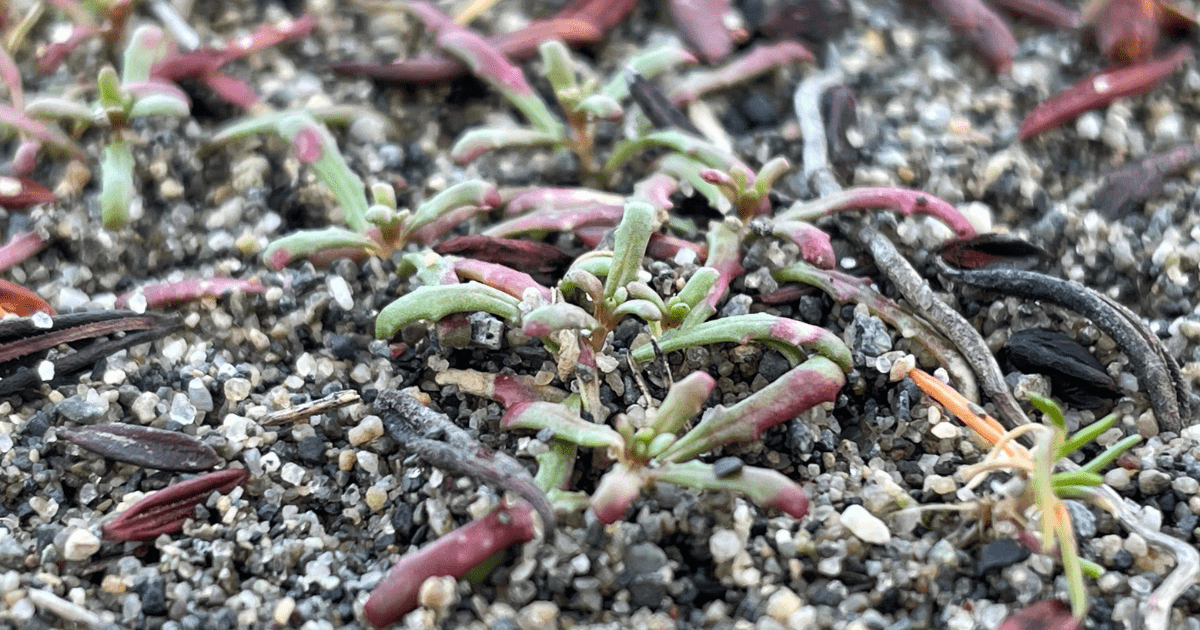
Despite its adaptation to this harsh and ever–changing dune environment, the contorted–pod evening primrose is red–listed and designated as an endangered species by the Committee on the Status of Endangered Wildlife in Canada. It is at risk of extirpation in Canada with only 8 known populations remaining, located on Vancouver Island and the Northern Gulf Islands like Savary Island. All these populations are small, making it difficult to sustain population growth in the face of disturbance or competition from habitat loss and invasive species. The good news is that the CPEP is doing well further south in its range.
The bad news is that all of the populations at the northernmost edge of its range, that are adapted to the conditions here with unique genetic characteristics and diversity within the species, may be lost forever. It is often these populations on the edges that can best adapt to changing environmental conditions like climate change. Not only is CPEP important to conserve in its own right, but the decline of contorted-pod evening primrose in Canada is representative of an overall loss of habitat and reduction in our coastal sand dune ecosystems.
Coastal sand dune ecosystems are relatively few within BC and they are only found on some of the northern Gulf Islands, Vancouver Island, and Haida Gwaii. They form only where there is a gently sloping shoreline, which is naturally a rare occurrence in the province, but they are increasingly vulnerable to threats from development and invasive species. Coastal sand dunes provide a buffer from flooding and erosion during storms as they are resistant to erosion, migrating landward or seaward depending on movement from wind driven processes. This ability of sand dunes has been viewed as both useful and as a threat, because of the possibility of erosion undermining coastal infrastructure especially on more developed coastlines. This has led to a regime of sand dune stabilization, modification or removal. A common form of stabilization is to plant aggressive non-native species like Scotch Broom and European Beach Grass (Ammophila arenaria) into the dunes, inhibiting the naturally dynamic nature of sand dunes and out-competing the native plants and animals. All these factors have combined to greatly reduce the number of intact sand dune ecosystems in BC, so even though sand dune ecosystems have relatively few plants, they have very high proportion of species at risk.
Conservation areas like this one are key to providing areas where sand dunes do not threaten critical infrastructure and are free to exist in a dynamic state. Invasive species are still a threat to the sand dune plant communities in protected areas, and they are very much present at Savary Island as we have seen with Scotch broom. Our South Coast Conservation Field Crew continues to work at removing Scotch broom from key sand dune areas. During our most recent site visit, we did not find any sign of the contorted-pod evening primrose. Our team we will be looking once again this upcoming field season; if we find the elusive plant, we hope to collect seeds to plant more of this important species. Witnessing the recovery of the sand dunes following restoration efforts in the last few years has created a sense of hope for the revitalization of the sand dune plant communities given the right conditions. This experience has instilled a belief that despite all the challenges they face, there is a chance that one day the contorted-pod evening primrose will be thriving once again on Savary Island.
Thank you to all of the volunteers from Savary Island that have come out to help at our Broom Bash events over the years. The support and contribution from the community has cleared much more of the Duck Bay sand dunes than we could have done on our own and we are already looking forward to the next one.
Follow NTBC across social media to hear the latest about our work.
We gratefully acknowledge that our Vancouver office is located on the traditional, ancestral, and unceded territories of the xʷməθkʷəy̓əm (Musqueam), Sḵwx̱wú7mesh (Squamish), and səlilwətaɬ (Tsleil-Waututh) Nations, who have been stewarding this land since time immemorial. Our work and conservation areas encompass many lands throughout the province, and we humbly acknowledge the First Nations communities who live on and steward these lands.

 Boosting Biodiversity and Ecosystem Resilience in the Kootenays Through Forest...

Stay connected to the landscapes you help protect. Receive updates from the field, stories of conservation in action, and opportunities to support and experience BC’s natural places.